
Annual Malleefowl Mound Monitoring
Malleefowl have declined significantly throughout Australia, primarily as a result of widespread clearing of remnant mallee vegetation for agricultural production. Introduced predators such as foxes and cats are also having a significant impact on Malleefowl populations, particularly on chicks and eggs. Increases in temperature and decreases in winter rainfall are also predicted to contribute to declines in Malleefowl populations and localised extinctions because of decreased breeding success and an increase in the frequency and severity of bushfires.
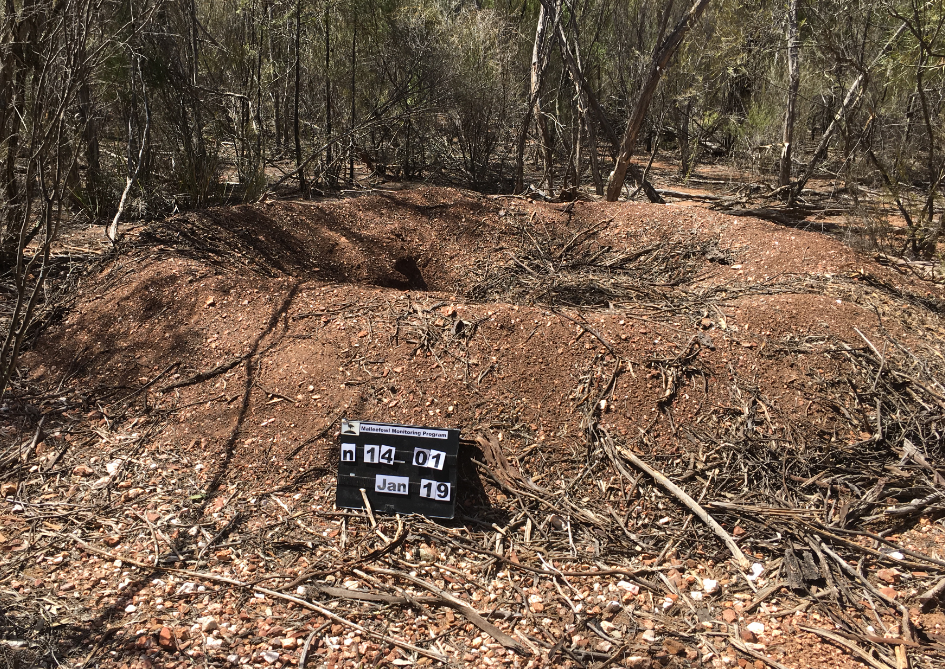
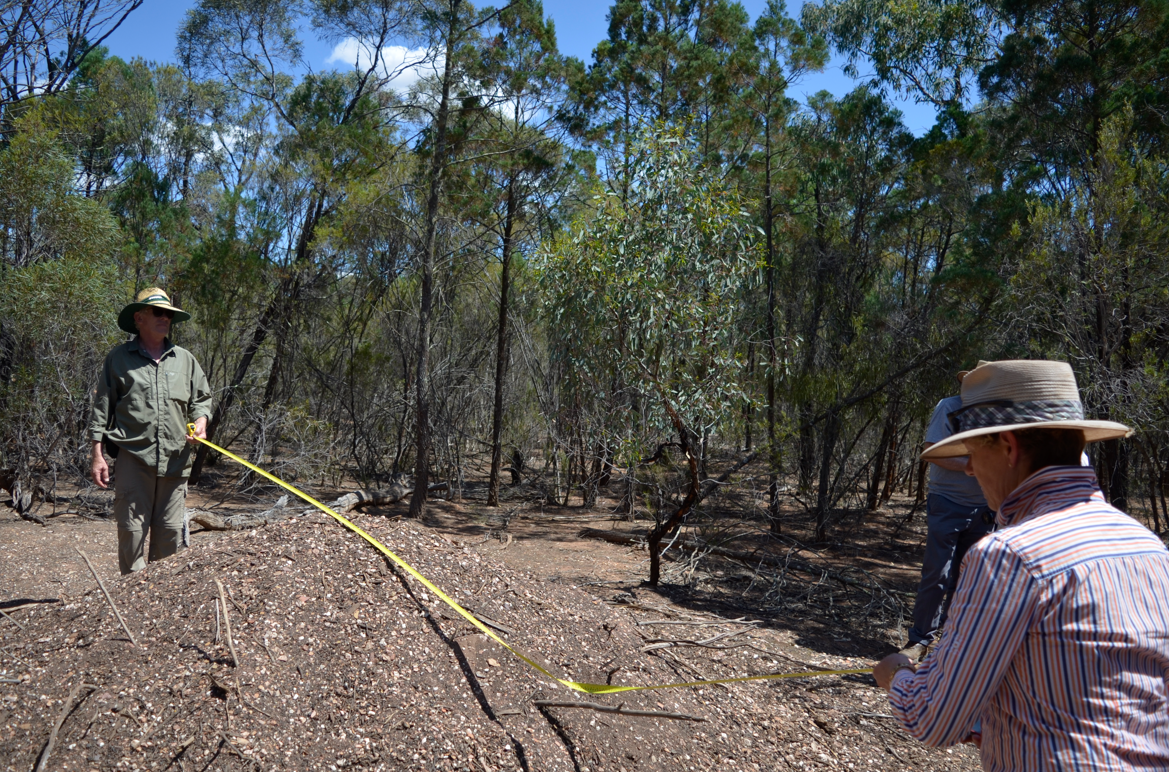
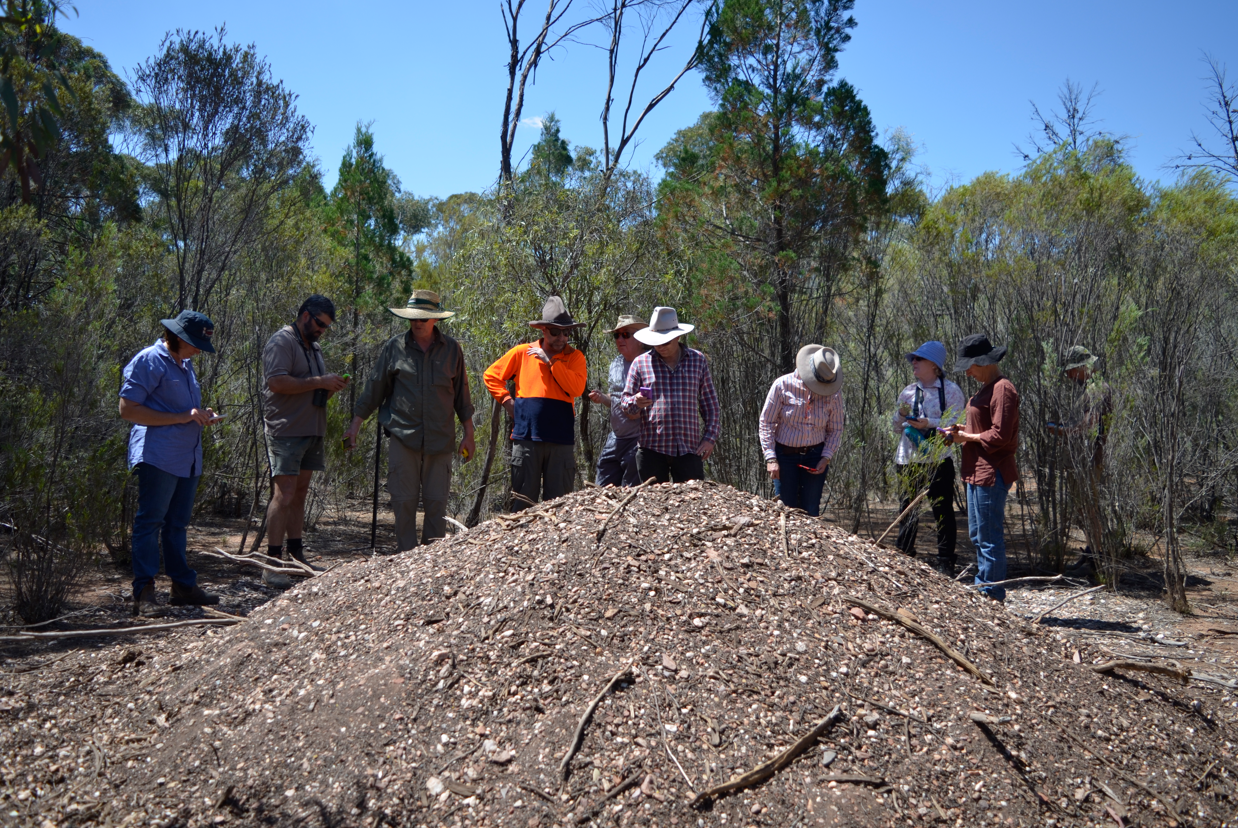
The National Malleefowl Monitoring Program was established as a consistent method for determining Malleefowl breeding trends throughout Australia. The program requires known Malleefowl mounds to be checked annually during spring or summer when Malleefowl are actively maintaining the mound. Information about the profile of the mound, whether the mound is currently active and the presence of egg shell, animal scats and prints on the surface of the mound is recorded. A photo point is also taken each year. All data that is collected as part of the monitoring program is then entered and stored in the National Malleefowl Monitoring Database (NMMD).
To get involved in annual monitoring with the NSWMRG, become a member and contact us to register your interest.